Daily Briefings
Rather than layering more relevance signals on the original feed, I designed Daily Briefings as a separate personalized morning view. The Feed stayed the firehose; Briefings became the context-setting starting point.
Creating the workflows of the future with an evolving AI product: turning unmet needs into a coherent product vision at speed.
I joined a team that had done discovery by the book: requirements co-created with users and a roadmap full of requested features. The product still was not working for them. I shifted the work from feature delivery to creating the workflows of the future with an evolving AI product: uncovering unspoken needs, making a coherent vision tangible, and moving from mapping to tested designs without losing delivery speed. The result connected prioritization, research, trust, and team visibility into one workflow.
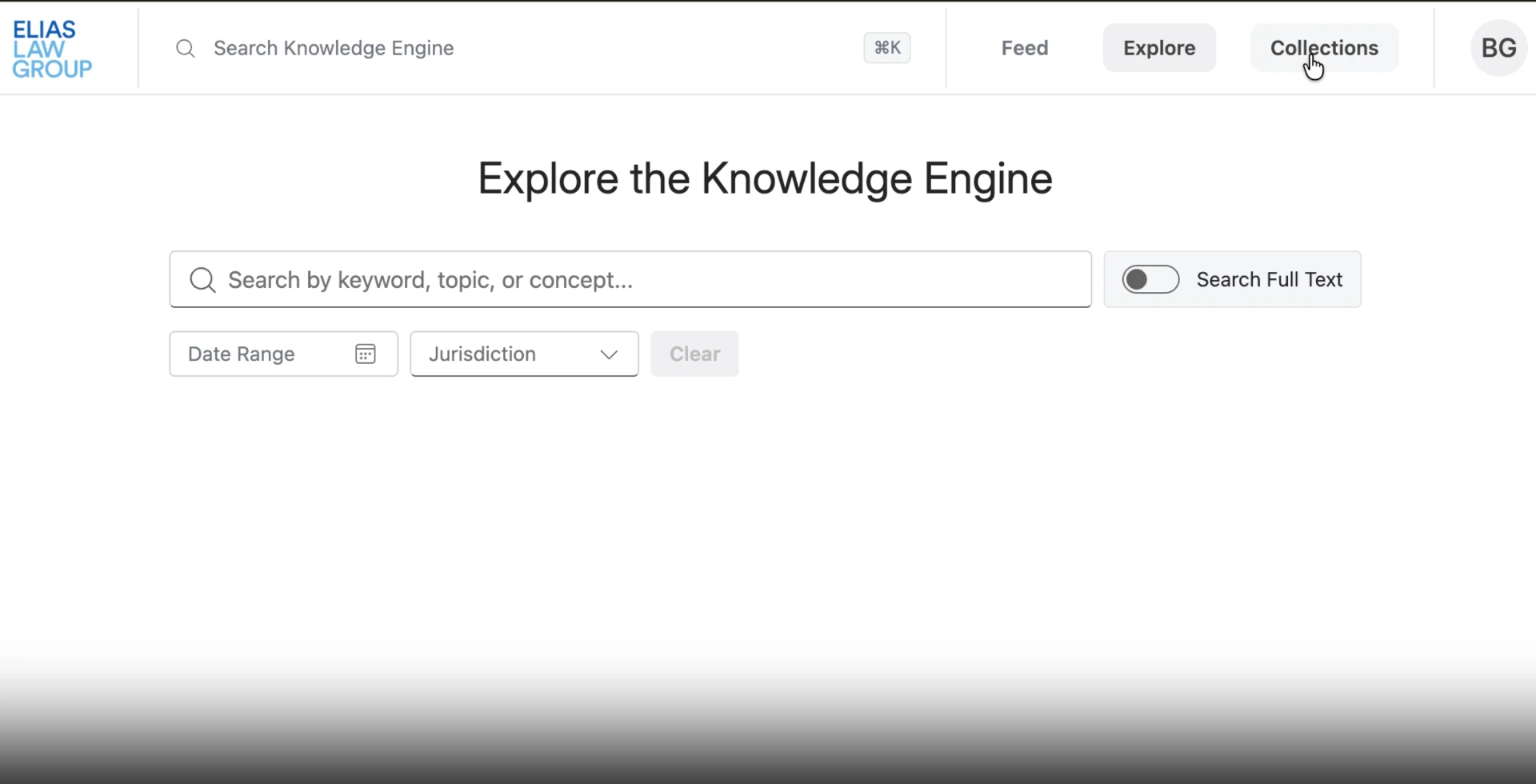
The initial scope focused too narrowly on a single search moment: while technical constraints made meaningful search improvements difficult, we had yet to consider where that moment fit within the wider workflow or where the product could deliver greater value.
The first view isolated the repeated search pattern: broad and specific queries both led to the same scan-and-flag loop.
Widening the scope to the full workflow revealed opportunities to connect prioritizing, monitoring, reviewing, and sharing research with AI, creating a seamless experience and delivering far greater product value without relying on costly improvements to search alone.
Twenty-eight interviews across leadership, management, and research assistants revealed the unspoken needs the original requirements had missed.
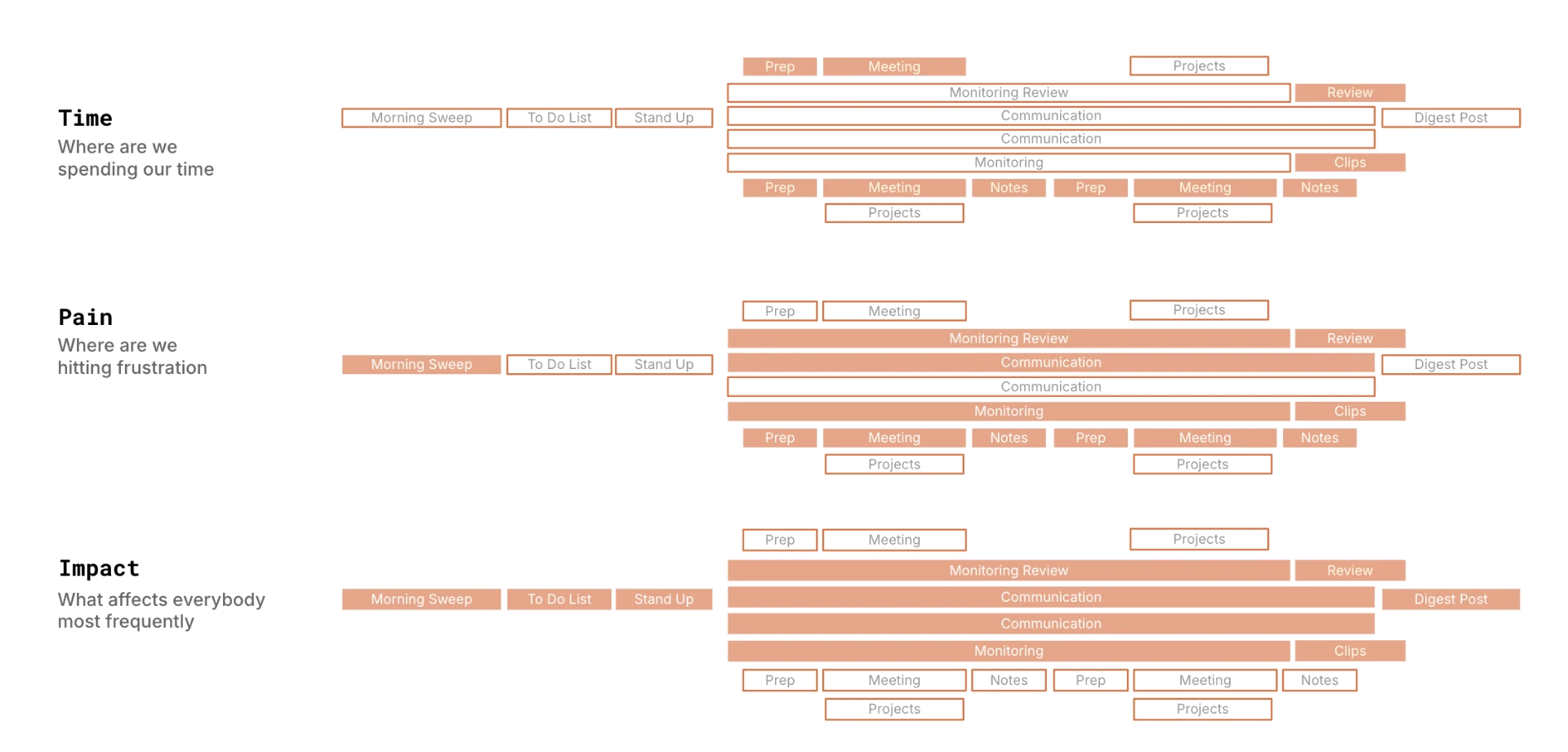
I turned the research into a coherent system for the team's future workflow, connecting the AI features across the experience.
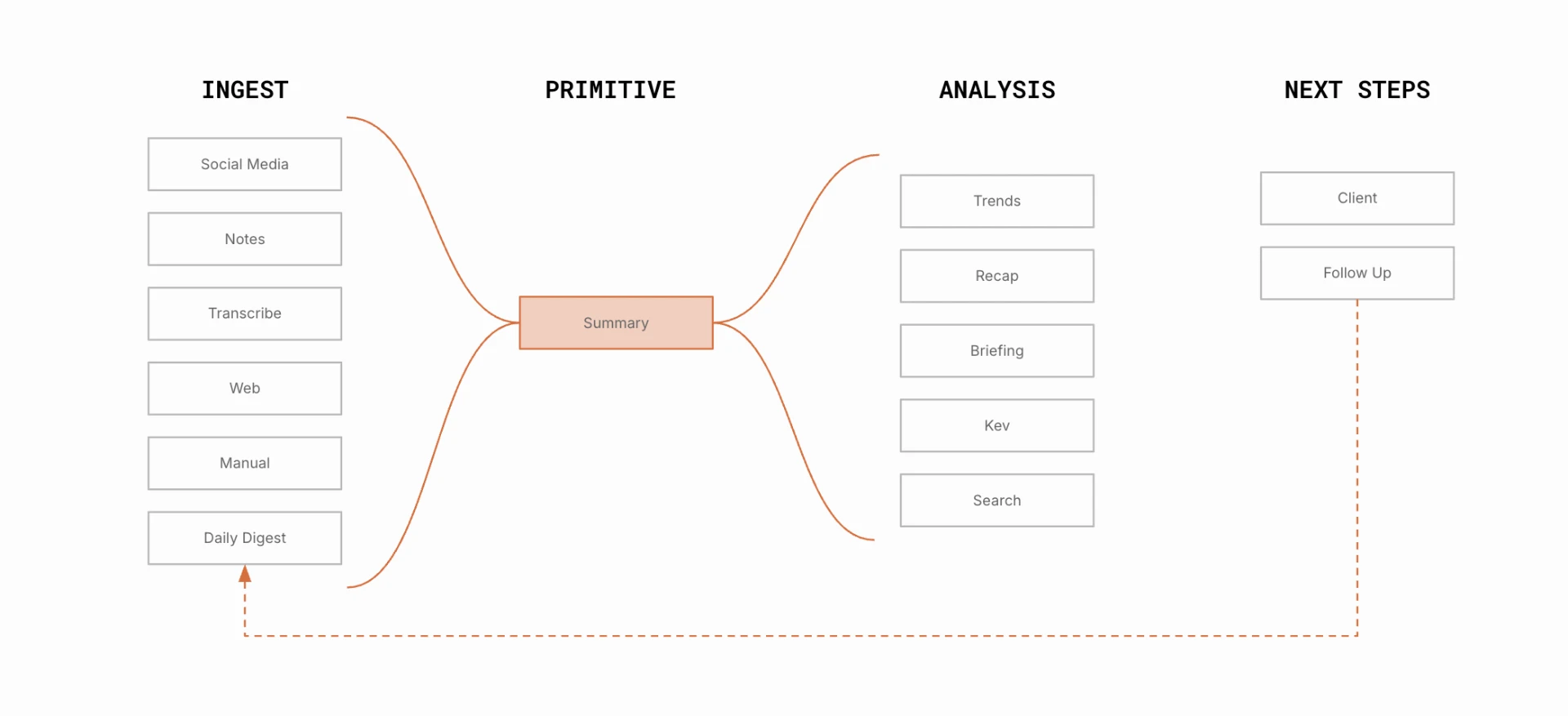
The new vision started by mapping the full ideal data workflow the product would support, from incoming information to analysis and action. A reusable summary became the shared foundation, connecting inputs, insights, and next steps across that workflow.
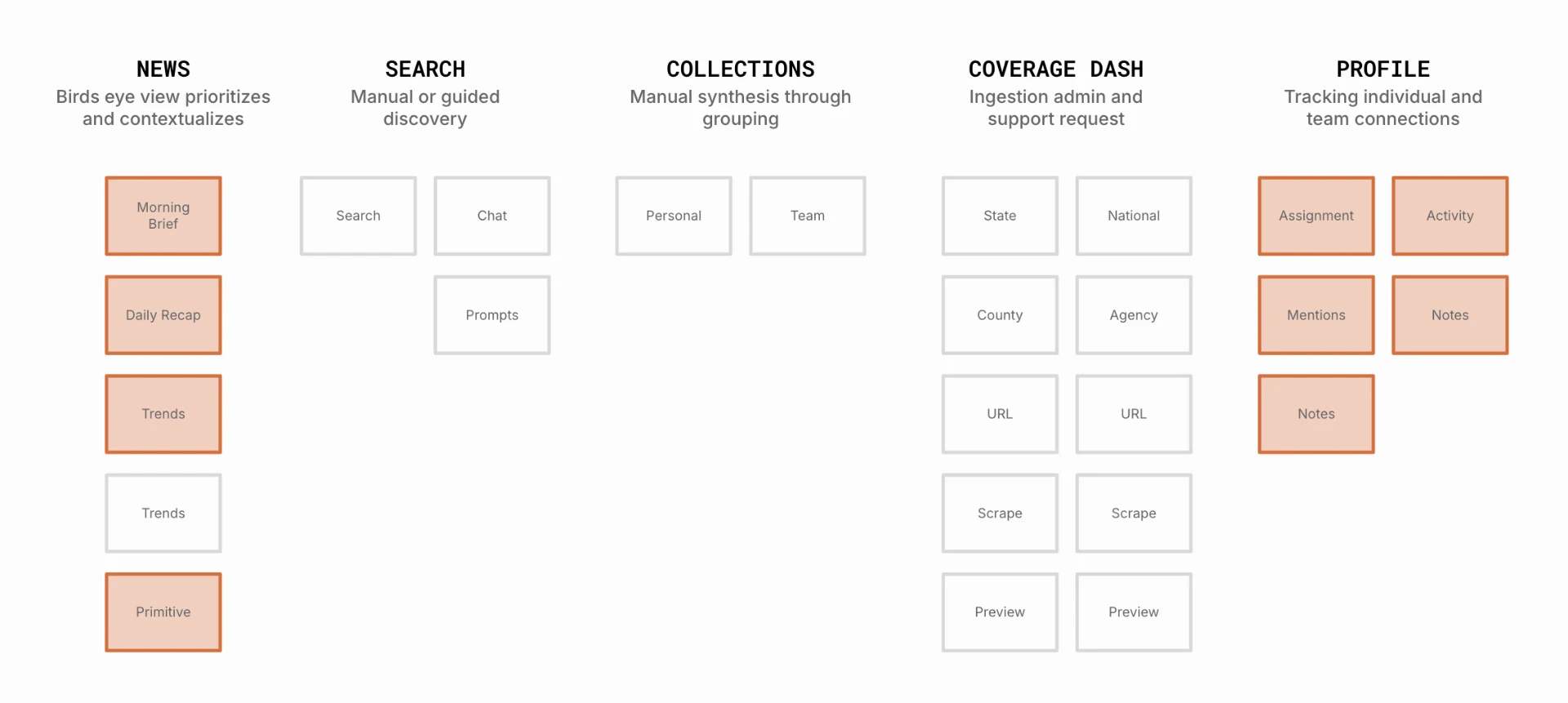
This site map outlined the ideal product direction and where each feature should live, grounding the experience in the team's jobs to be done and aligning the product structure with the mapped data workflow. The bolded boxes are the new features, phased in for the roadmap.
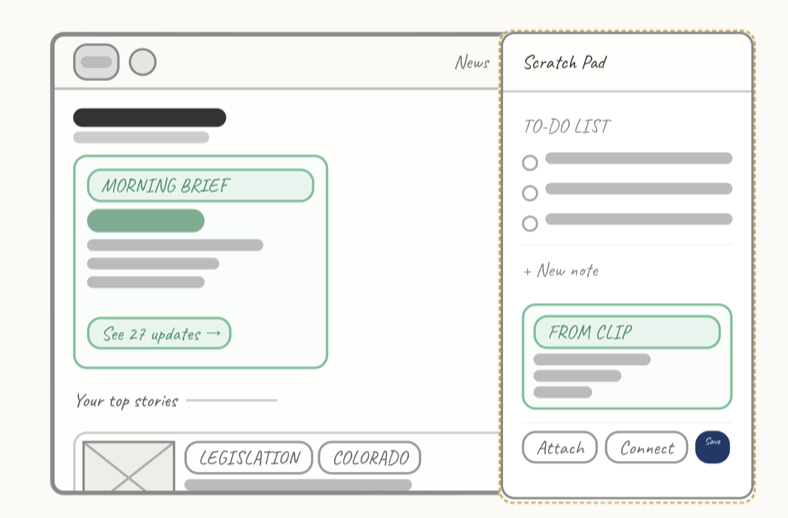
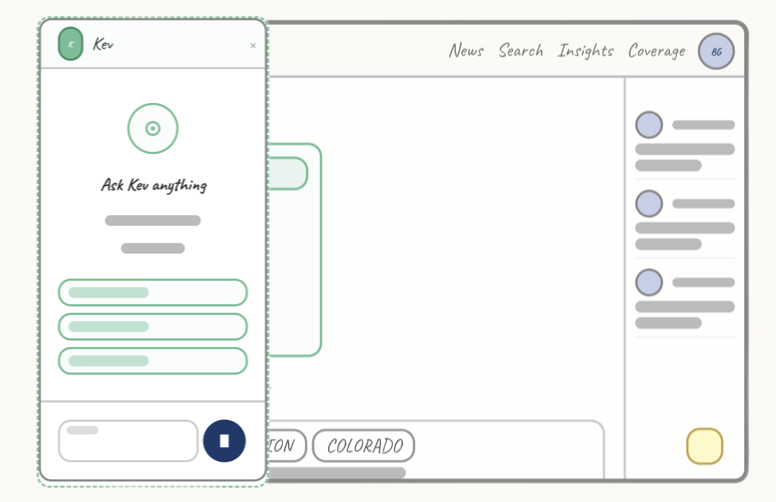
Fast, low-fidelity sketches helped us secure buy-in on the new approach before development and test how features should be divided across the product. We focused on the biggest areas of change, using the sketches to tell the story of their value and make the proposed experience tangible.
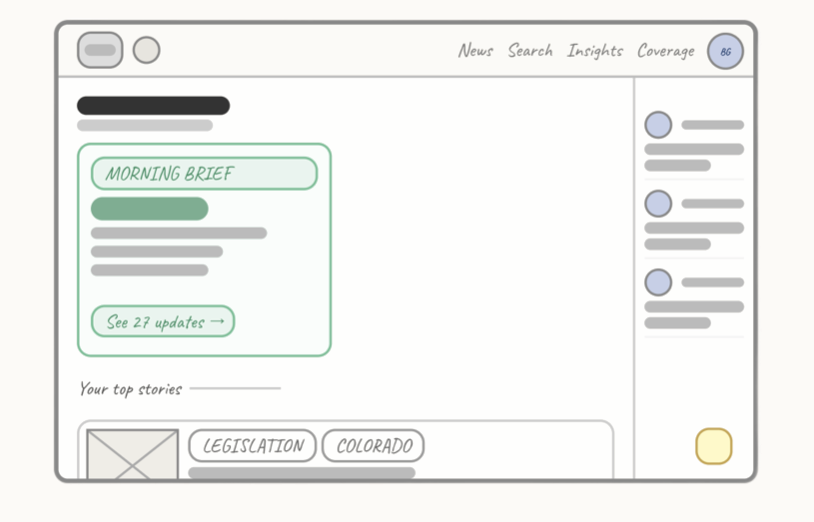
The day now opens with a prioritized brief: the updates that matter, counted and ready to scan, instead of an inbox of raw feeds.
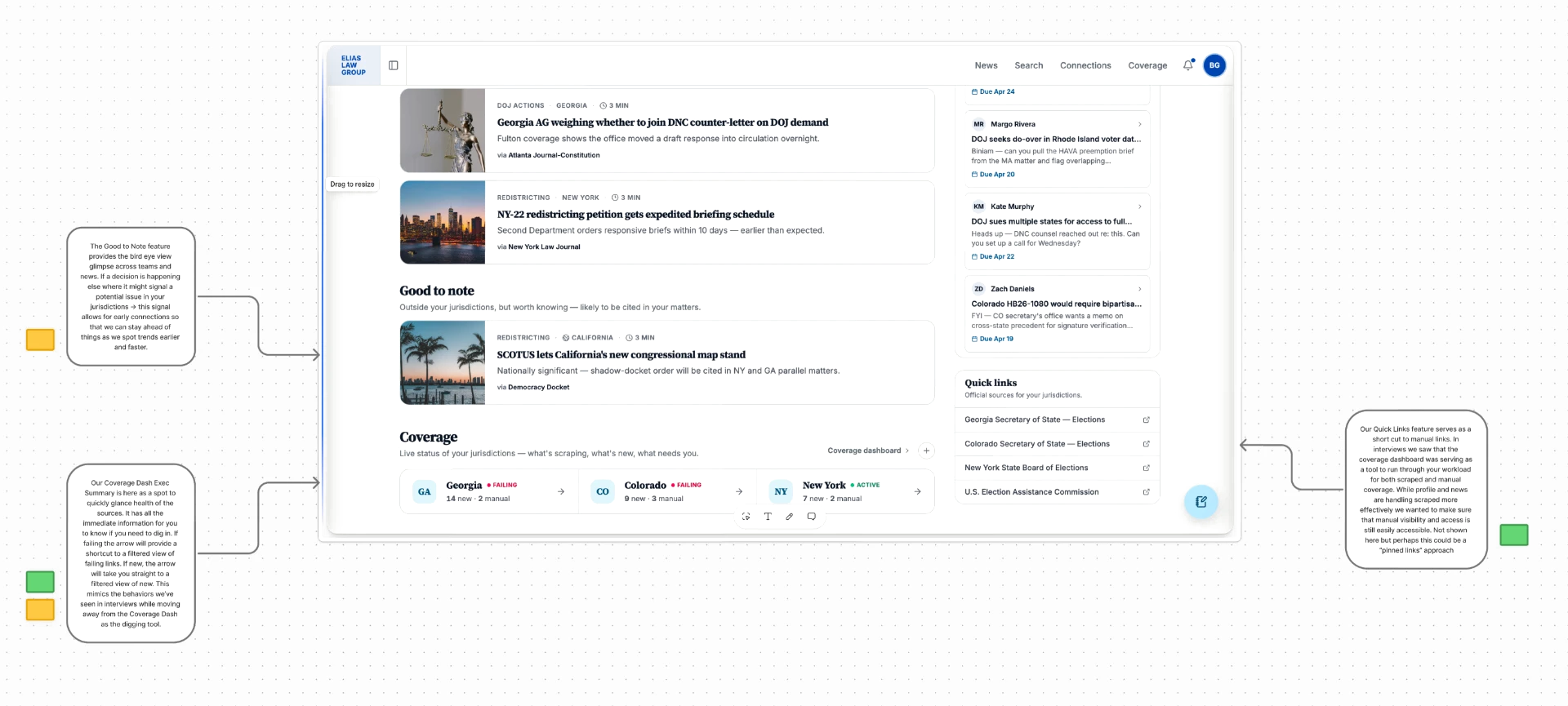
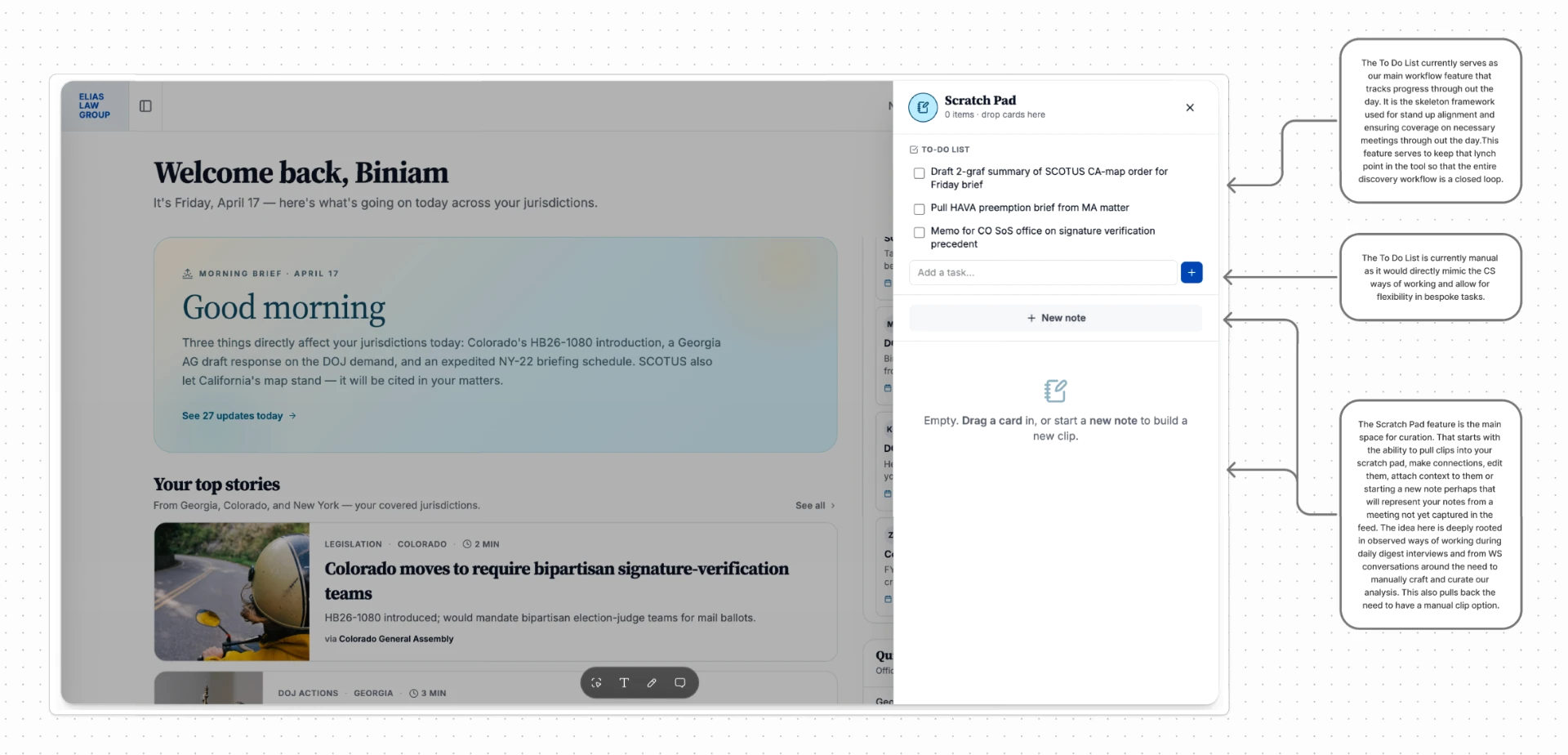
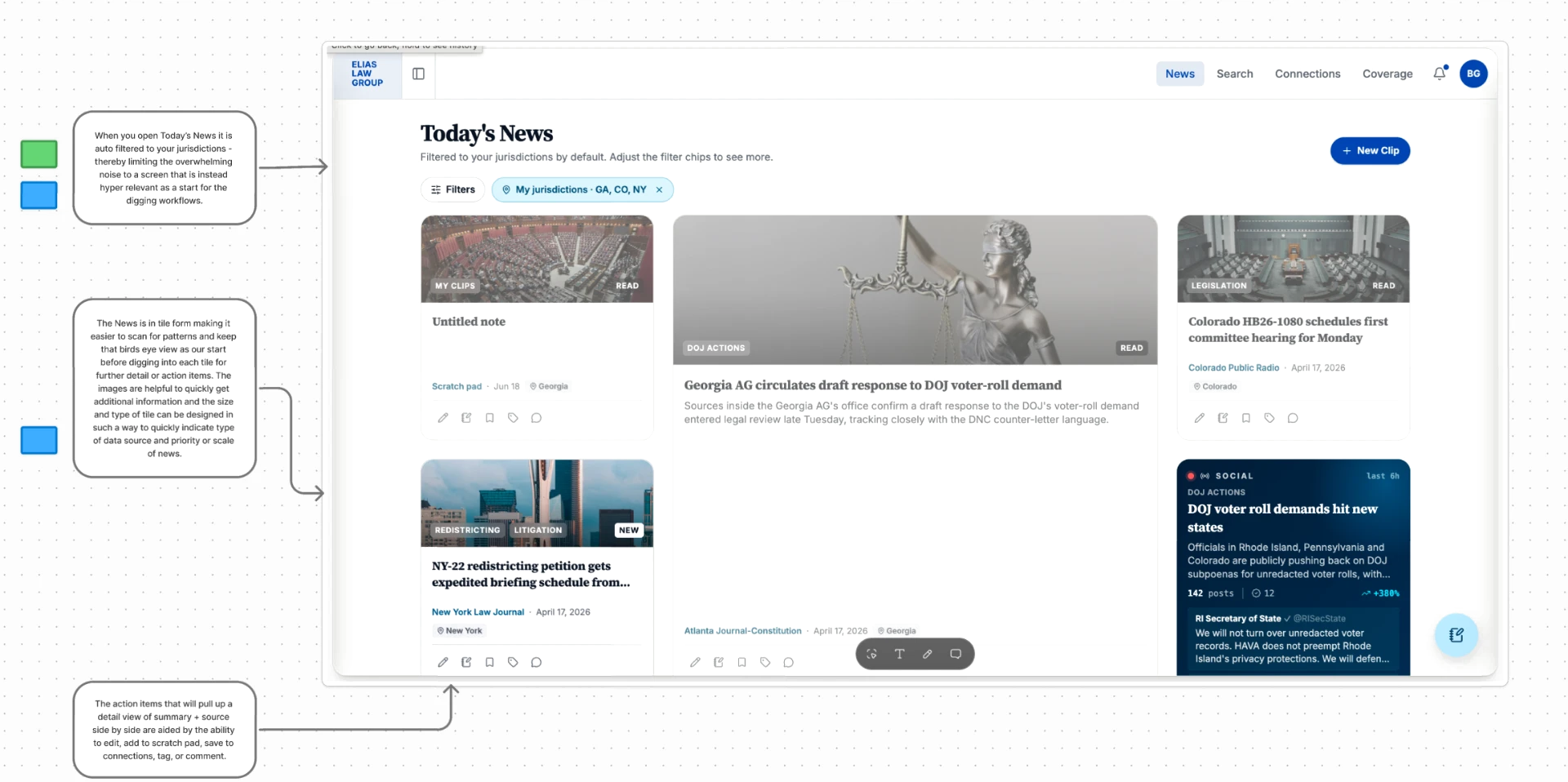
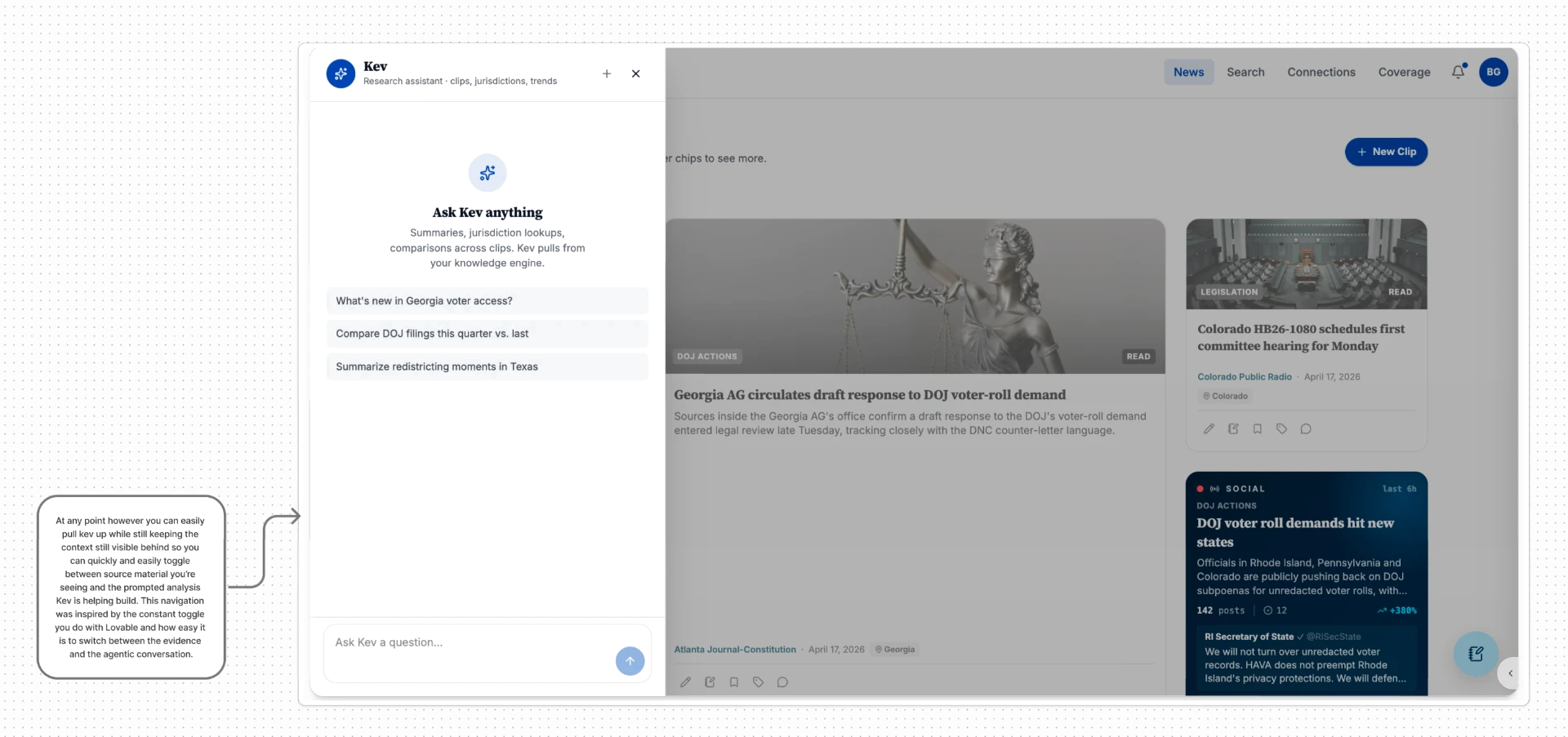
Higher-fidelity screens then translated the sketches into a clearer experience, with annotations showing where and how each change addresses user needs, creates impact, and puts our design principles into practice.
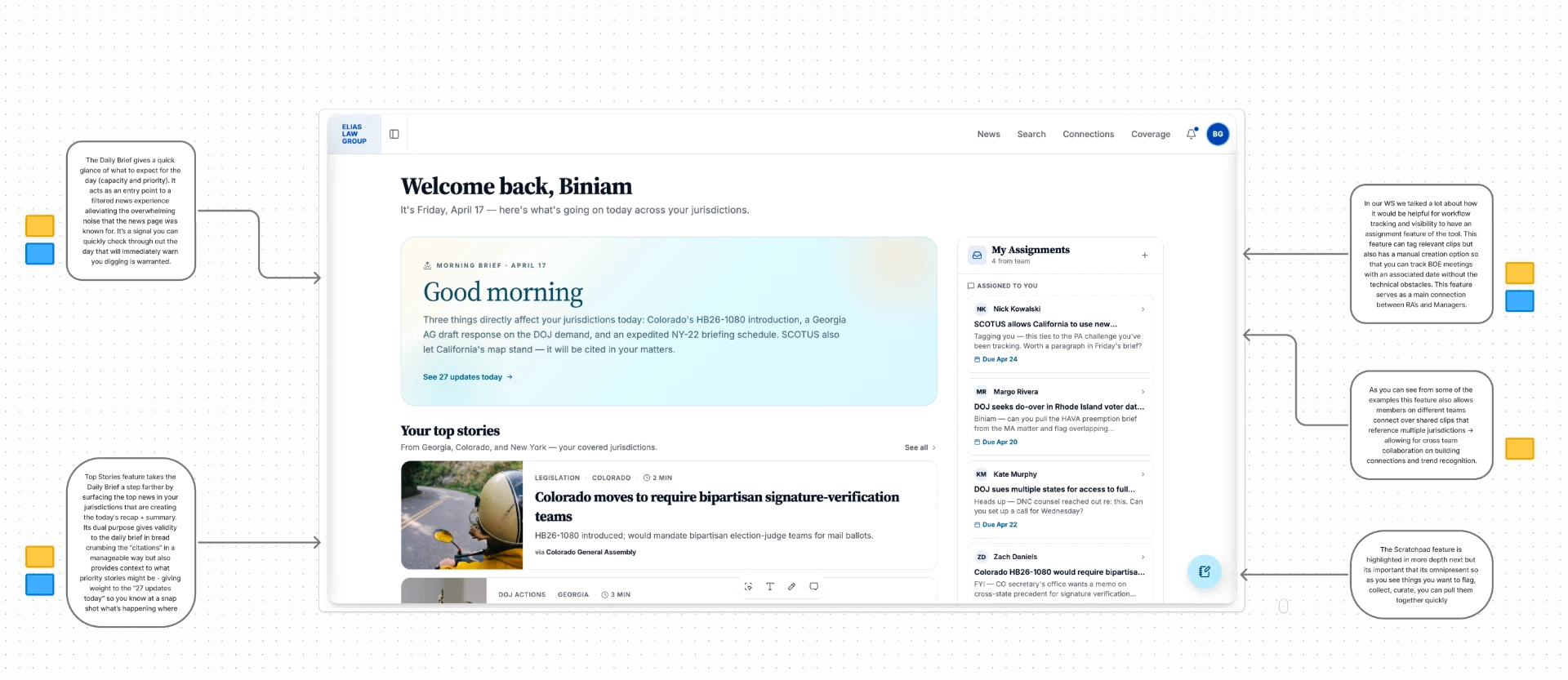
The day opens with a Morning Brief, a rapid signal about what deserves attention first, with Top Stories as its scannable citation.
Color key: design principles each feature moves the needle on
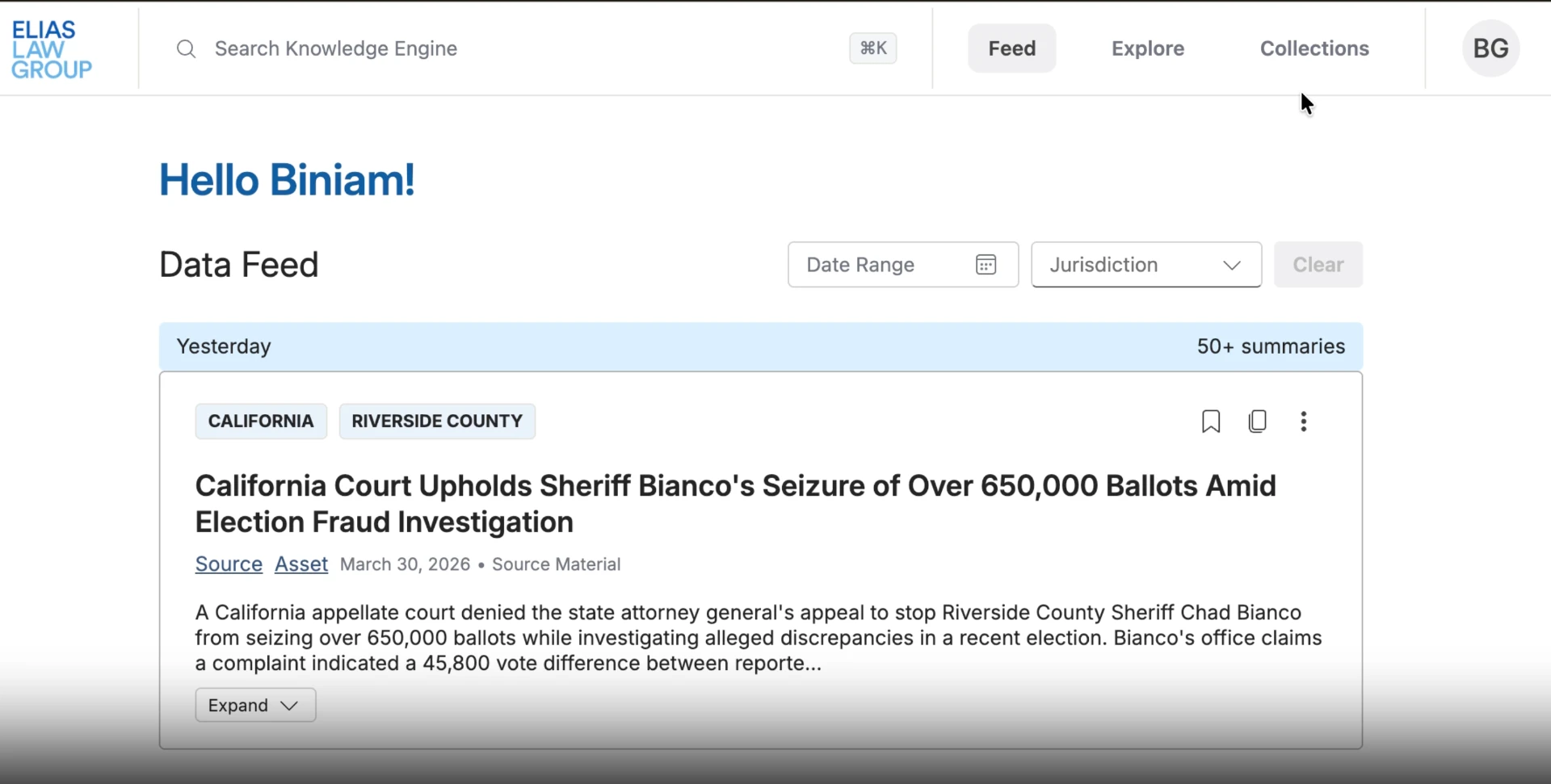
The feed collected information without helping researchers decide what needed attention first.
The redesigned research workspace brings briefings, search, and coverage into one workflow.
Rather than layering more relevance signals on the original feed, I designed Daily Briefings as a separate personalized morning view. The Feed stayed the firehose; Briefings became the context-setting starting point.
A strip showing each researcher, their new item count, and reviewed fraction created a shortcut into focus-area filters while giving managers a clearer view of capacity.
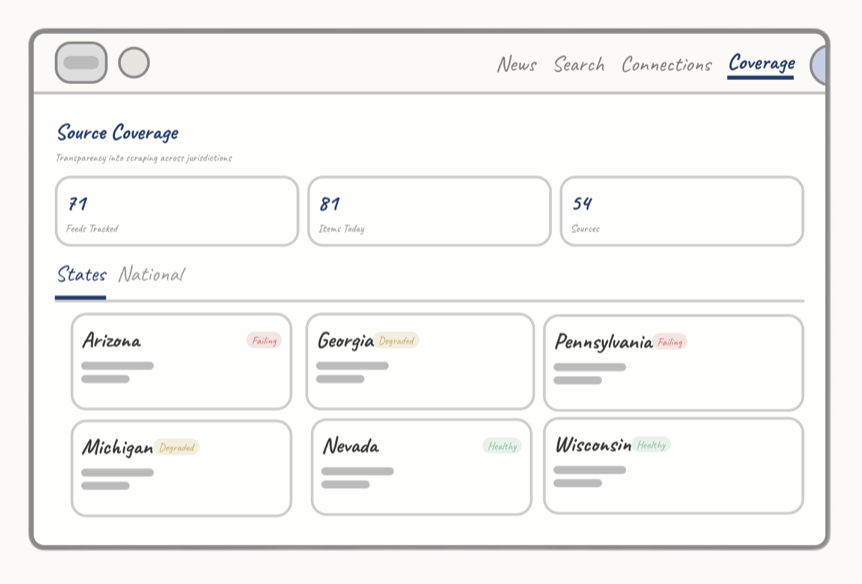
An internal dashboard made ingestion success visible through a summary strip and per-state status cards. Researchers could expand a jurisdiction, inspect its scraped sources, and preview content without losing context.
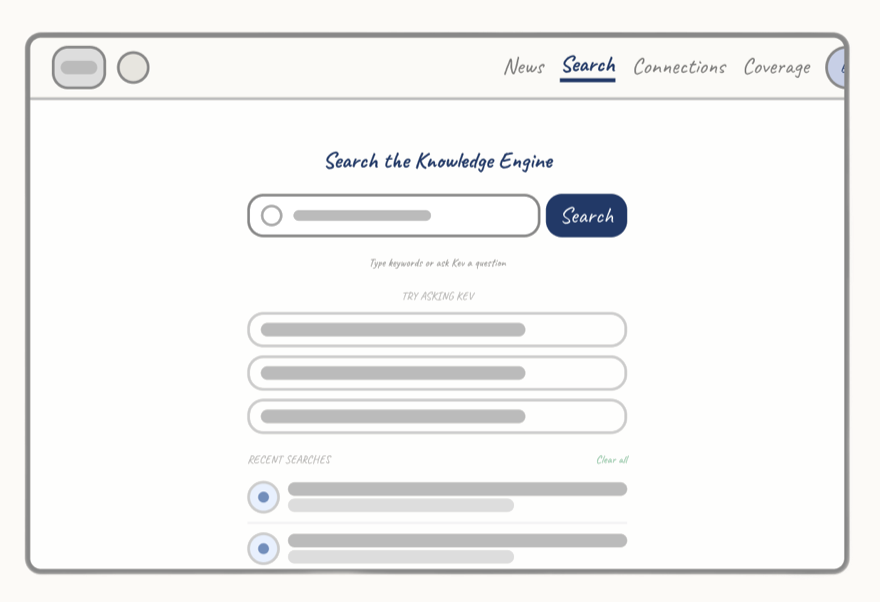
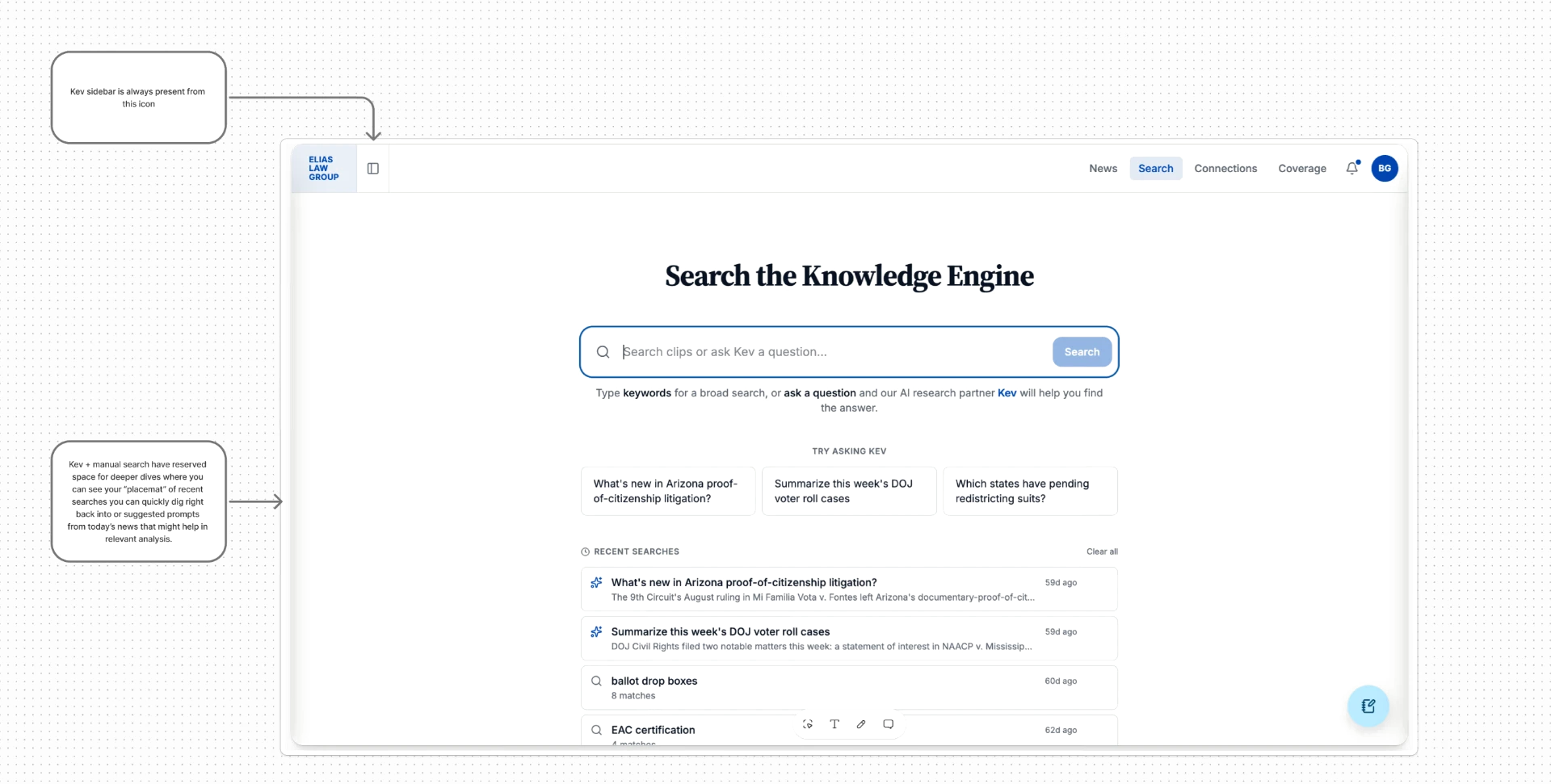
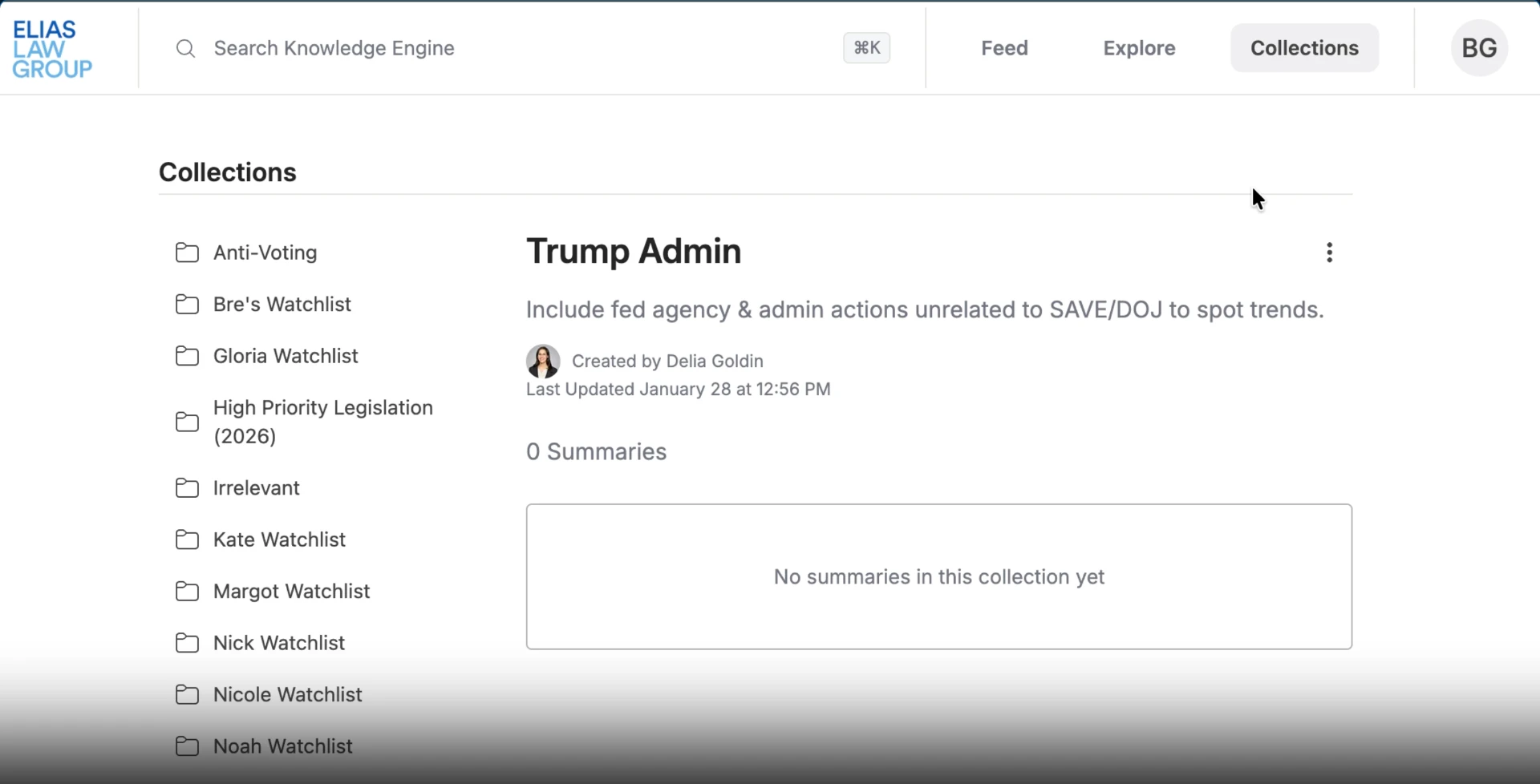
I turned Explore from a blank search bar into a dual-mode surface: keywords for broad clip search, or a question for a synthesized answer with source clips attached. Suggested prompts reduced the cold-start problem for new users.
A broader product direction emerged from looking past the feature list and into the rhythms of the work itself.